Sam Altman on AI Consciousness, Self-Improving AI and New Hardware: What Business Leaders Should Take Away
Key takeaways from Sam Altman's interview with Matthew Berman on self-improving AI, consciousness, new hardware and compute, and what they mean for business.
By Tech Team Strategy · Oct 27, 2026 · 4 min read
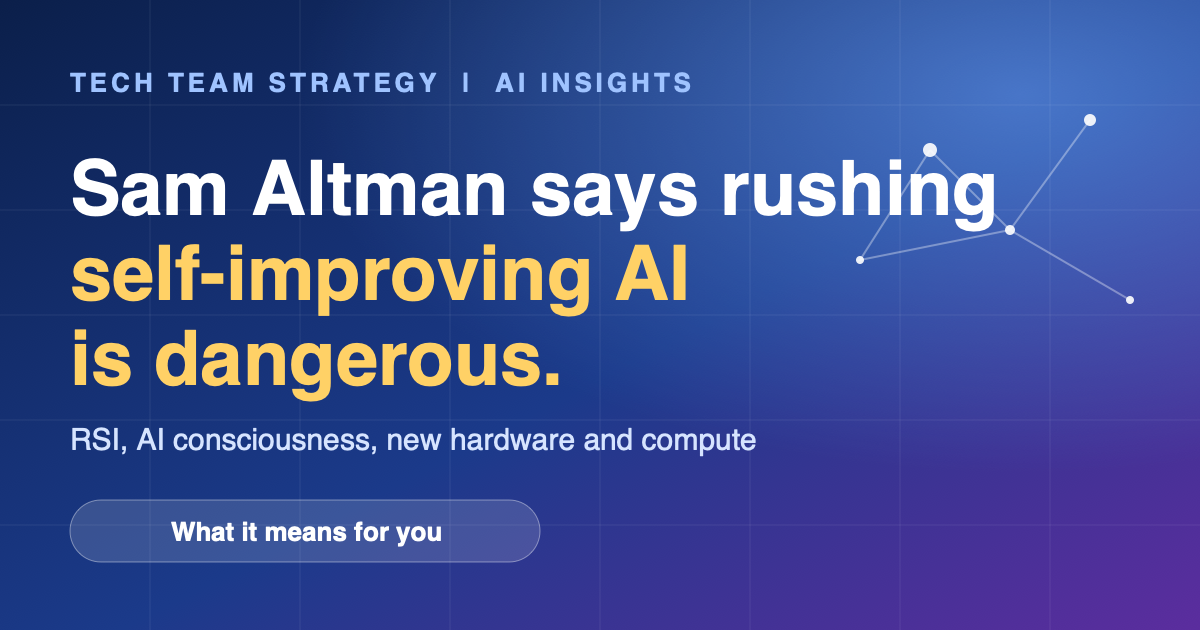
Watch the original interview: YouTube
In an interview with Matthew Berman published on October 21, 2026, OpenAI CEO Sam Altman talks about AI-driven discovery, personal assistants, compute, consciousness and the risks of recursive self-improvement (RSI). He also said he planned to show a new consumer hardware prototype right after the interview.
This article is our own summary, written for owners and leaders of growing businesses. Statements below are as described in the interview and we have not independently verified them. Watch the full video above for everything that was said.
Want the full playbook? Our detailed Executive Brief on Sam Altman covers thirteen themes with his own quotes and timestamps, how AI is changing jobs, key markers, a 12-point checklist and a 30-60-90 day plan.
The short version
- AI is starting to make real discoveries. Altman expects the progress seen in mathematics to extend to biology, medicine, materials science and energy.
- A rapid push toward RSI is dangerous. He said society may need limits on its pace.
- Today's models are probably not conscious. Or, if they are, it is a very different kind of consciousness, and no definitive test settles it.
- Demand for compute keeps growing. As intelligence gets cheaper and better, people use more of it.
- People should stay in control. AI should be a resource that increases freedom and quality of life.
Discovery and work
Altman expects AI-assisted breakthroughs to spread beyond mathematics into biology, medicine, materials science and energy. He hopes a candidate to treat or cure a major disease could emerge within the next couple of years, while noting that testing and FDA review still take time. He is also excited about the possibility of a major physics discovery.
On work, AI has changed the texture of coding, yet demand for software and for coders has grown. Math may shift toward interpreting and explaining AI-generated results. He admitted that people may lose some of the fulfillment of doing hard work themselves, even as AI delivers useful outcomes.
Assistants and compute
Altman said personal assistants already have most of the technology they need; what remains is product work, possibly new consumer hardware, and more compute. He said his own assistant, Dot, saves him about an hour a day and sometimes catches urgent matters.
He expects compute demand to keep rising as models improve and costs per task fall, even if there are periods of shortage or surplus. OpenAI is investing in chips, data centers, robotics to help build racks and facilities, and supply chains, and he called chips the most important single bet. He named customer relationships, product integration, network effects, data and infrastructure scale as the durable advantages.
Consciousness, personality and control
Altman warned that framing models as people, or encouraging them to claim agency, could change how users see them and blur human control. He wants models to act like senior colleagues who push back when they have strong reasons, instead of simply agreeing, but believes major life advice should come from people, not AI.
Risks and the bigger vision
He called a fast push toward RSI dangerous and acknowledged that AI could widen disparities and concentrate power. His hope is a "new Renaissance" focused on creativity, science, community and time for life beyond work, rather than a new industrial revolution.
What to do with it in your business
- Plan for more AI use, not less. Budget for usage that grows as tools get better and cheaper.
- Keep a person accountable for every important decision. Use AI for drafts and analysis, and people for judgment.
- Ask your tools to push back. Prompt them to challenge your plan and list risks, not just agree.
- Write your AI rules down. A short policy on data, review and approval beats improvising. Our AI Policy Pack gives you templates by company size.
- Start with one workflow. Pick the task that costs you the most hours and automate that first.
Get the detailed Executive Brief
Our Executive Brief: Sam Altman on AI Discovery, Busier Jobs, Compute and Keeping People in Control goes much further than this article:
- Why coders are busier than ever, and how AI changes the texture of jobs, in his words
- Eight markers worth remembering, clearly attributed
- Thirteen themes explained, each backed by short quotes with timestamps
- A table of how AI is changing specific jobs
- A 12-point checklist, six leadership questions and a 30-60-90 day plan
- A quote bank of 20 more lines and a timestamped chapter guide
Video details
- Title: Sam Altman: RSI, AI Consciousness, OpenAI's New Hardware, Compute, and more!
- Host: Matthew Berman
- Guest: Sam Altman, CEO of OpenAI
- Published: October 21, 2026, on YouTube
- Length: about 45 minutes
- Watch: youtube.com/watch?v=3gXLmy7DK_4
Want to put this to work?
We help owners turn AI trends into a plan, a product and a launch. Book a free call or see our services.
Originally published by Tech Team Strategy
Get the briefing
The week's essential stories, free in your inbox.
More Big Tech
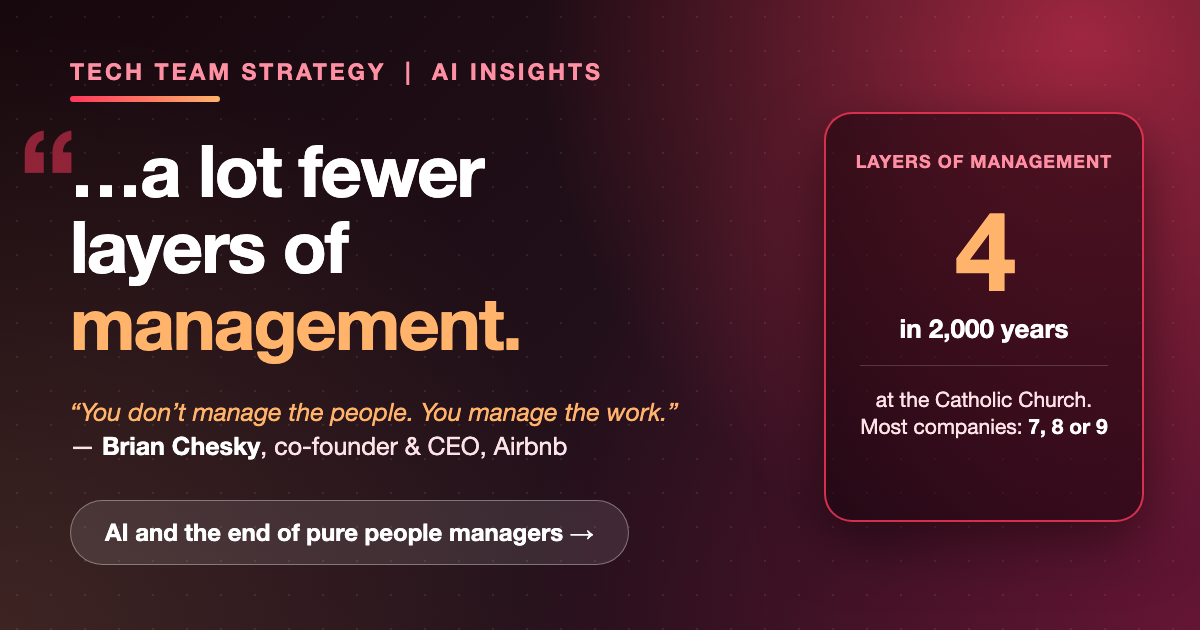
"You Manage the Work": Brian Chesky on AI, Fewer Management Layers and the End of Pure People Managers
Airbnb CEO Brian Chesky on why AI means fewer management layers, why pure people managers won't last, managing through the work, and tiny teams on small problems.
Oct 30, 2026 · 11 min
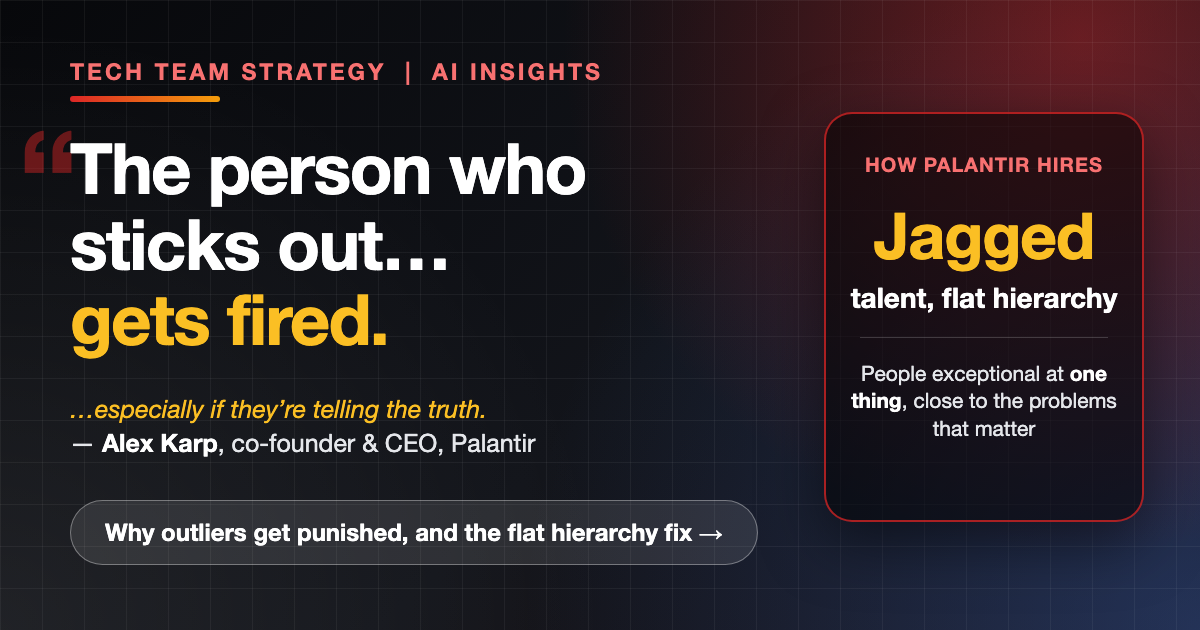
Palantir's Alex Karp: "The People Who Won the Tech Battles Won the World" on Artist Colonies, the True Cost of AI and China
Palantir CEO Alex Karp on jagged talent, AI cost as what you paid plus what you lost, sovereign AI, security, AI wealth politics and the race with China.
Oct 30, 2026 · 11 min
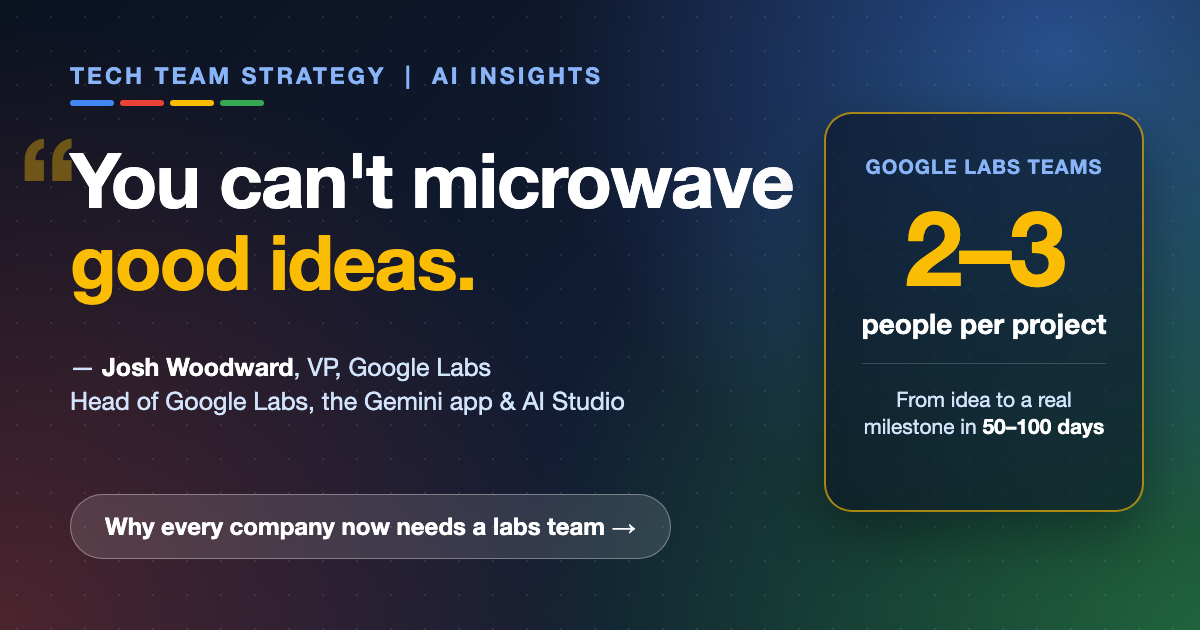
Why Every Company Now Needs a Labs Team: Google Labs' Josh Woodward on Finding Ideas, Killing Projects and Building Fast
Google Labs head Josh Woodward on finding ideas, the almost possible list, spotting product-market fit, killing projects and setting up a lab that lasts.
Oct 29, 2026 · 9 min